



This week, Clay S. Jenkinson spends the entire show answering listener questions.
This week on the Thomas Jefferson Hour, Clay Jenkinson visits with Pat Brodowski, formerly the head gardener at Thomas Jefferson's Monticello. Pat explains how she found her way to Monticello, what she learned about Thomas Jefferson from working every day in his extensive garden, and how she is occupying her time now as a retiree. Plus, Pat gives tips to our listeners about how to grow something in the next year.
Dr. Lindsay Chervinsky and Clay Jenkinson discuss Jefferson's daughters. Thomas Jefferson was highly expectant of their behavior and let them know it through a series of letters. When he died in bankruptcy, his daughter Martha was left nearly penniless and had to deal with the aftermath of Jefferson's poor money management.
Clay Jenkinson speaks with David Swenson about the ethnomusicologist Frances Densmore and her work with the Lakota in the Dakotas beginning in 1911. David has spent the last year working on The Densmore Repatriation Project, re-cataloging and restoring her wax cylinder recordings.
At Standing Rock in 1911, Frances Densmore met with dozens of tribal elders and recorded traditional songs on wax cylinder. Densmore documented this work in her book Teton Sioux Music which became a touchstone for learning about Lakota/Dakota culture. The Densmore Repatriation Project reintroduces the songs with new recordings made by contemporary Native singers.
The Densmore Project’s website: lakotasongs.com
The Densmore Project on YouTube
KX News: Re-introducing Lakota Songs
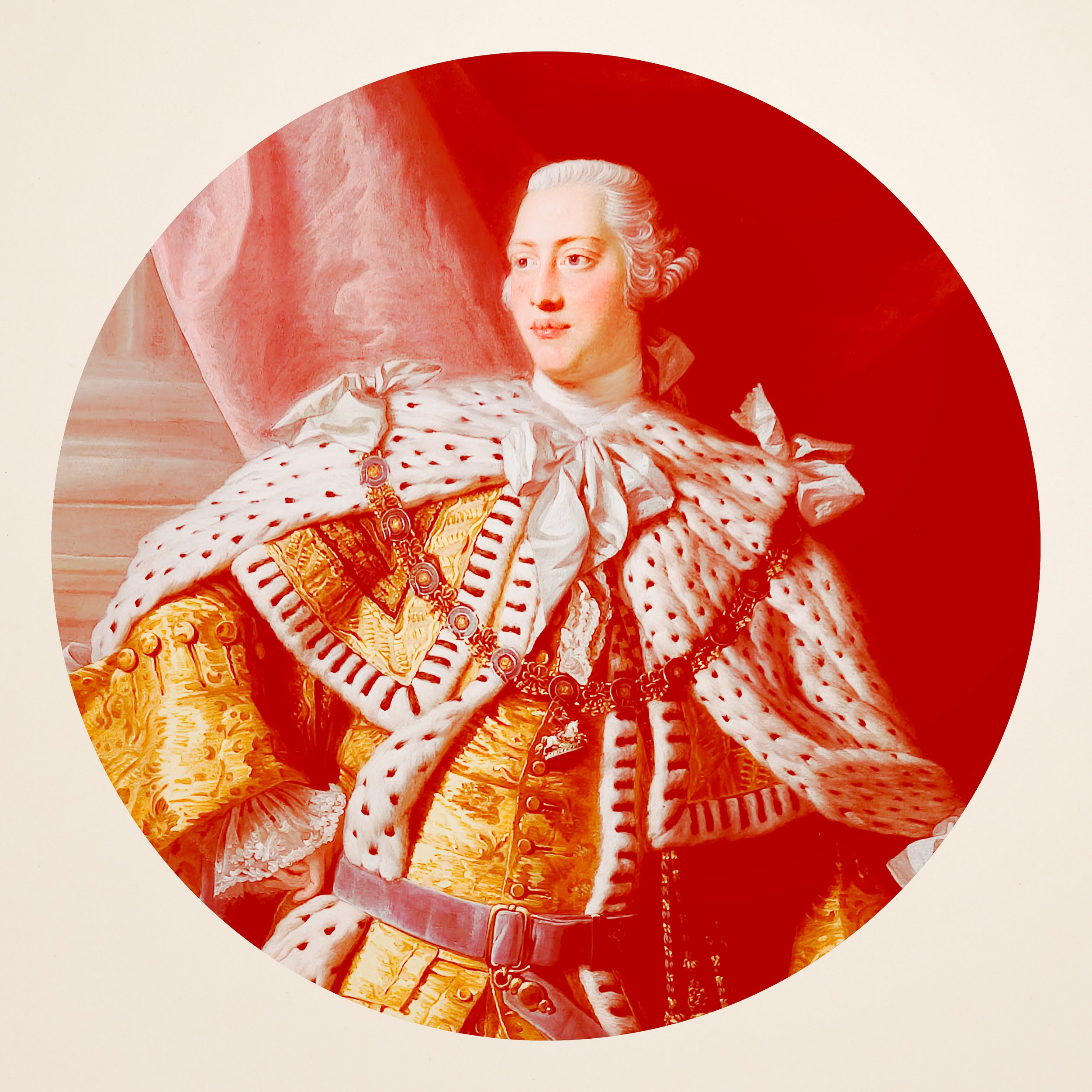
Dr. Lindsay Chervinsky and Clay Jenkinson discuss King George III and his effect on the American Revolution. According to the British historian George Otto Trevelyan, the King was determined to "keep the rebels harassed, anxious, and poor, until the day when, by a natural and inevitable process, discontent and disappointment were converted into penitence and remorse."
ROME
My various work projects had been so demanding that Easter 2015 had hardly even entered my mind before I boarded flights for Rome last Friday. I had no way of knowing that this would be the most intense Easter of my life.
Shortly after landing at Rome's Fiumicino airport on Easter eve, I found myself watching Mel Gibson's The Passion of the Christ (2004) with a dozen deeply devoted Catholic college students. I had never seen The Passion before, and I can affirm that I will never watch it again. In its own way the film's depiction of the last twelve hours of Jesus' life is gripping, but it is so unrelentingly and graphically violent that I had to cover my face a number of times just to get through it. It seemed to me that no body could ever endure so much grotesque physical abuse, that if Jesus had actually been subjected to the kind of torture depicted in the film, he would never have lived long enough to be crucified.
There are paradoxes here. We know that Jesus was crucified by the Roman authorities after being whipped and scourged and beaten. The Romans were ruthless about such things. So the depiction in The Passion of Christ is probably more realistic and historically accurate than we like to think. And—I get it—the point of Mel Gibson's film is to make us just as uncomfortable as possible without driving us out of the theater. How can we understand God's decision to make himself suffer the ultimate human degradation unless we have something like a real understanding of what that must have involved by way of physical and mental suffering?
As I watched The Passion in horror, I realized that my idea of the crucifixion has always been pretty vague and mythological. Whenever I have stood before Michelangelo's stunning Pieta in St. Peter's—one of the world's supreme works of sculpture—I have never once stopped to recognize that by the time Mary held her dead son in her arms, Jesus' body was torn in every way, pierced by a spear, whipped and scourged right down to the ribs, bloody, bruised, swollen, and profoundly disfigured. The perfection and artistic serenity of Michelangelo's treatment removes the bloodlust from the story, and lets us concentrate instead on the pity of the crucifixion, and even the divine dignity of it, rather than its sickening violence. I give Gibson credit for that—he made the torture and execution of Jesus real for me for the first time.
Too real. The film's obsession with graphic violence felt gratuitous to me. It turned my stomach rather than deepened my understanding of the sacrifice. I could not sleep for many hours, but during that time I was not praying to God or Jesus in praise or sorrow, I was just sick at heart at man's ingenuity in meting out pain to his fellow man.
One more note about the film. Just as Jesus began to climb the steep hill of Golgatha, carrying a cross that even a healthy man would have had trouble hoisting up the trail, a real thunderstorm broke over Rome. We all jumped from the unexpected flash of lightning, and exchanged nervous glances. The last forty minutes of The Passion were, for us, accompanied by a kind of angry orchestral thunderstorm.
On Easter Sunday we got up at first light to hasten by city bus to St. Peter's Square. An audience of more than a million pilgrims was expected. If we had any expectation of getting seats close to the platform on which Pope Francis would celebrate the mass, or for that matter to get any seats at all, we had to get to St. Peter's three full hours ahead of time, and then jostle our way to preferred seating once the security team began to let people pass through the magnetometers. At times it felt more like a badly organized Super Bowl than a Papal mass at the Vatican, but the students I was with were savvy and ready to forge their way (politely but unhesitatingly) to excellent seats. I do not exaggerate when I say that there were elderly nuns in the crowd who locked arms and surged forward like a Greek phalanx. People come from all over the world for this sacred occasion.
When we took our seats, about ten rows back from the protective fence, it had begun to drizzle. Just three hours to go! Then it began to rain. Then it began to rain hard. Then it began to rain cats and dogs. I had brought a couple of books in my backpack to occupy the long wait before the mass began, but they would have been ruined in minutes if I had pulled them out. By eight a.m. the crowd entirely filled the vastness of St. Peter's Square and spilled over blocks deep in every direction. Just two and a quarter hours to go! As far as I could tell there was roughly one umbrella for each hundred people at the Vatican. If ever there was a moment that called for a loaves and fishes miracle, this was it. The number of umbrellas did actually seem to increase over time, but it rained well more than an inch Easter morning, perhaps two, and no matter how many umbrellas interlocked to create a kind of ad hoc pilgrim's awning, that water had to go somewhere. The net effect was not to keep us any dryer than we would have been bareheaded, but to concentrate the flood into icy rivulets that suddenly ran off the umbrella ahead of you (or behind you) and down your back.
By the time the mass began at 10:15 a.m. we were as wet and cold as it was possible to be, sitting in cheap plastic chairs that had become shallow pools of rain water, trying to get a glimpse of the Pope, or anything at all for that matter, through the sea of brightly colored umbrellas. We were about as close to Pope Francis as it was possible to get, and yet we could neither see him nor even see the giant Jumbotron that televised the event. Most of the students had begun to shiver, sodden with rain, chilled by wind, with the temperature at about 40 degrees.
Nevertheless, almost everyone who had come to St. Peter's Square stayed—because it was Easter, because individuals had ventured, at great expense, from all over the planet to experience this moment, because (we all had to feel) what's a little discomfort in the face of Jesus' agonies? We stayed, too, because we were in the presence of Pope Francis, who has in his remarkable ministry struck an unusually strong chord with the peoples of the world. My group stayed also because Tom Schulzetenberg, the director of UMary's Rome program, had been given the high honor of reading a short text to almost a million pilgrims.
Hours later, once we had gotten out of our soggy clothes and showered for a very long time, we broke bread together back at the Rome campus. I had smuggled in jelly beans and chocolate eggs and Jello from Dakota. Jello, it turns out, doesn't perform very well outside of its home court. Here in Rome it was just a dark red slurry on our plates.
This was the Easter I will never forget.
St. Peter's and the Vatican, Rome. Giovanni Battista Piranesi. 1750. From the New York Public Library Digital Collections.
Sometimes in North Dakota when we get through winter, there is a puny little mini-spring that lasts a few days or a week, and suddenly—seemingly overnight—it is summer. As we all know, summer doesn’t mean quite the same thing here that it means in other places. There are very few hot or even lovely Memorial Days in North Dakota, and it can be windy, chilly, and grey right up to the end of June. This year we are getting a genuine spring with variable weather and lots of blowsy wind. That makes me happy.
I’ve been recording my observations.
Thursday, March 12—First shirtsleeve day of the year. In mid-March! I walked six miles at 5 p.m. and did not take even a jacket with me. That’s an act of trust this time of year but it worked out. Precisely one week ago, same time, same walk, it was below zero. The low on March 5th was minus 8. The high today plus 72. That’s an 80-degree difference in one week. When I walked the same trail a week ago I wore a parka, mittens, a stocking cap, and a scarf, and seriously thought of turning back after the first mile. My legs were numb.
Friday, March 13—I walked my long walk reading a book. I do this because I love to read and walk, walk and read, but there are vehicles that go by that seem to regard this as either a physical impossibility or a parlor trick. A car bursting with teenage testosterone (six young men celebrating spring) flashed by and a boy shouted “@#XX% freak!” I waved in good humor. But at some point, no matter how absorbing the book, I close it firmly so that I can walk twenty minutes and just drink in the magnificence of the plains. Endless blue skies in every direction.
Monday, March 23—My first meadowlark of the year. I’ve been waiting impatiently. It was five miles south of Bismarck, east of the Missouri River. Ten days ago someone posted on Facebook a meadowlark siting (hearing) in southwestern North Dakota. That evening, I broke an engagement to take my walk in hopes of hearing my first of the year. But no. Normally one sits on the power lines across the road from the trail singing the pure liquid song of the meadowlark--to celebrate life or seek a mate or protect territory, I’m not quite sure. But lustily. I was really disappointed that evening to come home empty-handed. The great meadowlark Chanticleer that used to live in my back yard, and return each year, has decided my neighborhood is a little too domesticated now (I think so too), and sought leaner pastures. I loved that yellow bird, and called back to it with a variety of meadowlark imitations, hoping to start a dialogue. I’ve been able in my life to talk with coyotes, in more or less their language, but never with a meadowlark.
Meadowlark numbers are down throughout the Great Plains. I know it sounds odd, maybe stupid, but my life would be seriously diminished without meadowlarks in it. They bring a kind of grace to our lives. They are a signature species of the Great Plains. They remind us that no matter how civilized we get, how mediated by screens and devices and in-doorsness, we share the planet with a range of wild creatures who are indifferent to our little sad dramas, and live their lives with as little contact with us as possible. There is hope in that.
The same evening I heard my first meadowlark I watched two vees of geese circle over a fallow field east of the Missouri. They were honking to beat the band. The two separate migration teams seemed to be barking at each other in anger. I don’t know if they were competing for the field (it was near dusk), or just somehow Trojan geese versus Greek geese, but it was hard to believe they could need to compete for airspace in one of the planet’s most open skies. Geese seldom fly in perfect vee formation. There are always stragglers madly flapping to catch up to the group, honking a kind of “wait up!” plea. I suppose there are whiners and malingerers among animals just as there are among humans (bipedal animals). I wonder if, once they land for the night, the alpha goose seeks out the losers and pecks them into compliance.
Thursday, March 26—I drove from Bismarck to Bemidji, Minn. Very little snow in central and eastern North Dakota. Unless there are freak soaking rains, the Red River won’t flood this year. I always try to remember to observe the Continental Divide sign between Jamestown and Valley City (1,490 feet), but I usually miss it in my daydreaming. I’ve bestridden many spectacular continental divides in the United States, but for some reason this one really delights me, because it is so improbable. It’s near mile marker 275. On the west side, the James, Missouri, Gulf of Mexico basin—2 feet to the east, the Sheyenne, Red, Hudson’s Bay basin. Sometimes I stop to take a photograph of it, I’m not sure why, because it is always the same photograph—green sign, fence, long green shoulder grass undulating in the wind.
You descend into the Red River Valley (the bed of ancient Lake Agassiz) without thinking about it, and then at some point you marvel at how perfectly flat the terrain has become. If you know what you are looking for you can see a series of beach edge remnants on the west side. But when you push through into Minnesota, the coming out of the Red River Valley is more dramatic than the coming in. Somewhere near Hawley, the land climbs up into wonderful roller coaster undulations. Minnesota’s rolling hill country between Detroit Lakes, Minn., and Fergus Falls, Minn., is among the most picturesque farm country in America. Barns with traditional silos in every direction. Here is true prairie—the meadow lands “between the trees.” And suddenly, somewhere near Park Rapids, birch trees begin to dominate the landscape. It’s all astonishingly beautiful. It’s amazing that the Red River divides two such dramatically different landscapes in such tight proximity. I love North Dakota with all of my heart, but there is no doubt why Minnesotans look down on us as occupants of a treeless, empty, and windswept landscape. Which is what I love most about it.
“Plains” is such an inadequate word. It has hurt our image in the national consciousness. For most people the word evokes emptiness and comparative flatness and a kind of homogeneous dreariness. Even “desert” has better associations in the national consciousness than Great Plains. But, as we say, there ain’t nothing to do about it.
So here comes April. Lewis and Clark experienced their first mosquito of the year on April 9, 1805, just west of Fort Mandan. I haven’t seen a crocus (pasqueflower) yet this year. It’s always a tight window of opportunity to kneel down in the grasslands to revere the most delicate, and I think most beautiful, of Great Plains flowers. If I miss seeing them I always feel that I have lost control of my life, and the glory of the North Dakota year is diminished.
But what I am waiting for most is the first thunderstorm of the year. That magnificent moment is what tells us that summer is not far off.
Prompted by a listener request, we speak with President Jefferson about gardening and his love of plants. Thomas Jefferson once said, "No occupation is so delightful to me as the culture of the earth, no culture comparable to that of the garden ... But though an old man, I am but a young gardener."
President Jefferson responds to questions submitted by listeners including inquiries about the rise of political parties during Jefferson’s time, Jefferson’s office space in the White House, his immediate family and how he feels about America’s fascination with the British royals.
"Nobody is entitled to a career in the Senate or a career in the House or a career in the governor's mansion, and the people who aspire to that are corrupt." — Clay S. Jenkinson portraying Thomas Jefferson
President Jefferson answers listener questions such as how representatives should react and vote when their own views differ from the constituents they represent. Another question looks at Jefferson’s relationship with John Adams.
"It's such a gift. Every day."
— Pat Brodowski
We speak with two of our favorite Jefferson Hour correspondents: Pat Brodowski, the head gardener at Monticello, and Beau Wright, a frequent contributor to the show and a city council member of Lynchburg, VA.
March 15, 2015
The weather last weekend was so lovely—sixty degrees and light wind in early March—that I forced myself away from several projects and went in search of the open air. I've been walking the city trail in my neighborhood, but that seemed too wimpy for a day of such perfect spring weather. So I grabbed a camera and a bar of chocolate and drove up ND 1804 on the west side of the Missouri River.
I like the west river road (1804) better than the eastern version (1806) because it is mostly unpaved, it goes through rougher terrain, and someone it feels more like western North Dakota. The great John Steinbeck, crossing the Missouri River on October 12, 1960, said, "Here is the boundary between east and west. On the Bismarck side it is eastern landscape, eastern grass, with the look and smell of eastern America. Across the Missouri on the Mandan side it is pure west, with brown grass and water scorings and small outcrops. The two sides of the river might well be a thousand miles apart." That's precisely how ND 1804 feels after you pass through the last of the settlements north of Mandan.
I climbed a butte in hopes of watching the orange full moon rise over the Missouri River, but I soon thought better of it for a range of reasons, and drove up instead to Cross Ranch State Park. The grand old stand of cottonwood trees there is magnificent even in the winter. The walking trails are excellent. I like to gaze at the Art Link cabin in silent reverence to one of the great men of North Dakota history. The mighty Missouri eases right in to the edge of the giant cottonwoods.
If I couldn't have these experiences, wandering aimlessly through North Dakota, drinking in the beauty and the subtlety of the great emptiness and the great silence, I wouldn't want to live here anymore. When I was growing up in western North Dakota you could wander just about anywhere with impunity. The sense back then was that if you were dumb enough to venture off the grid, you were probably a harmless pilgrim who knew enough not to leave gates open or light a fire in the grass or spook the cattle. In some interesting ways the state was a kind of "commons." That kind of innocent hospitality has been slipping slowly away for many years, but the sudden industrialization of our landscape has greatly accelerated it. There is a landowner uptightness now that is as sad as it is surely justified.
Last Sunday was one of those gray spring days at the end of the winter just before the lifeforce begins to poke new life through the dead leaves, and to extrude fragile pale green feeder leaves through the seemingly dead twigs of the massive cottonwoods. The ground cover was drab and brittle—on the color spectrum from charcoal to an anemic looking yellow. The sky was mostly gray-black. A front was moving through from west to southeast—low menacing lenticular clouds that appeared to be only a few feet above the canopy of the trees. I could see the western edge of the front as if it had been cut with a breadknife, and the sky beyond it was blue with the purity of a Biblical painting. The river was wide, sullen, silent, making a big sweep past Cross Ranch.
I wondered for a few minutes whether it would be possible to walk across the river. It was still covered with ice. I could not see any open water. Lewis and Clark's men used to walk across the river routinely during their five-month stay with the Mandan. Fort Mandan was on the eastern side of the river. The principal Mandan village Mitutanka was just over on the west side of the river, less than four miles away. Occasionally the captains and with great frequency the enlisted men ventured over to Mitutanka for off-duty entertainment. It's common to assume that what the men wanted was sex with native women—and surely some of that occurred—but my sense from the journals is as often as not they just wanted some social variety, a meal other than the now-standard roast buffalo of their military diet, a glimpse of domesticity in an earthlodge, a few hours in a community that was rooted here for the duration, not merely passing through on a heroic mission. I think many of the men were lonely for back home in Ken-tuck and Pennsylvania and they sought comfort in the stable family life of their Mandan hosts.
I did not walk across the river. Glug glug.
By this time in 1805 (mid-March), Lewis was all hepped up to get back on the road. He was a naturally impulsive, impatient, self-punishing man with a deep fixation on mission. The expedition was supposed to have reached the Rock Mountains in the first year of travel. The Corps of Discovery stopped for the winter in North Dakota for one simple reason. The Missouri River froze up. Their highway was closed. That Lewis and Clark wintered with the Mandan and Hidatsa Indians was more or less a wonderful coincidence. The Missouri froze shut a few days after they started building their winter quarters in early November and the ice broke up on the river on March 25, 1806, just two weeks before they pushed on into the great unknown. In other words, they traveled in 1804 as long as the road conditions let them, and resumed their journey more or less the minute the road re-opened the following spring. In the journals I can feel Lewis's impatience and urgency.
As I stood on the edge of the river looking as far in both directions as I could, I realized that if you plopped Captain Lewis back down next to me in the spring of 2015 he would recognize the landscape as essentially unchanged. That's one of the greatest things about North Dakota. Far off to the north I could just see the water tower of Washburn and a few yard lights. To the south, nothing but primeval Missouri River country all the way to the vanishing point. Across the river, a few sad looking wooden buildings not much larger than shacks.
Had Lewis been there with me, he would have wondered where all the 4,500 Mandan and Hidatsa folks had gone (and might presume the worst, given the evidences of smallpox he saw in 1804-06). He would have noticed that the river is wider, clearer, and more channelized than when he slipped through. But the honking of the geese would have brought back waves of memories of his long winter at the Great Bend of the Missouri. The marvelous muted shades of tan and drab and ice blue and sky blue would have been just what he remembered. And the great silence of the north.
He'd be fretting that he had promised President Jefferson a significant report—and such scattered notes as he had in his possession were not going to make that possible.
Clay Jenkinson welcomes back David Nicandri for a discussion about Sir Ernest Henry Shackleton, the explorer who led three British expeditions to the Antarctic. They also talk about Thomas Jefferson's influence on exploration. Nicandri is the author of River of Promise: Lewis and Clark on the Columbia and Captain Cook Rediscovered: Voyaging to the Icy Latitudes.
Clay Jenkinson recently lead a conference for the Smithsonian that introduced attendees to the Lewis and Clark expedition. The lecture was brimming with questions, so many that there was not enough time to answer all of them. This week, we try to finish that task and answer those extra questions about Lewis and Clark.
We present a fascinating conversation with HannaLore Hein, who in 2019 became Idaho’s first woman state historian. Clay Jenkinson and Hein discuss her duties as a state historian and talk about an author from Idaho, Vardis Fisher. His first novel, Mountain Men, was used as the basis for the 1972 film Jeremiah Johnson. His book, Suicide or Murder: The Strange Death of Meriwether Lewis, published in 1962, is regarded as starting the longstanding controversy over the death of Meriwether Lewis.
This week on the Jefferson hour, a conversation with David Nicandri about his new book “Lewis and Clark Reframed: Examining Ties to Cook, Vancouver and McKenzie”, and the importance of reading not only the journals left, but also their “day books”. In writing the book, Nicandri speaks about his goal to not just get get into explorers shoes, but to get “into their heads’.
The appalling and barbaric activities of the so-called Islamic State (ISIS, ISIL), coupled with the recent murders in France and increased terrorist threats worldwide, have unleashed a very widespread Islamophobia, particularly in the United States. President Obama has been severely criticized for refusing to identify this wave of barbaric activity as "Islamic." Turn on any television talk show and you can now hear commentators saying that there is something dark and demonic at the very heart of Islam and the Koran that seeks to torture and destroy the "Infidel" indiscriminately; that Islam seeks worldwide dominion (a renewed Caliphate); that Muslims are natural terrorists and the sooner we all realize this the more likely we are to keep our heads.
This is paranoia. And dangerous nonsense.
Don't get me wrong. I know there are thousands, even hundreds of thousands of radical Muslims worldwide, perhaps even a few millions, who are determined to attack non-Muslims (Jews, especially Zionists; Israel; Christians in "Islamic" lands; the secularists of western Europe; and the Great Satan itself, the United States). Some of these radicals operate inside the United States. More are trying to come. Some are embedded in our military. They are perpetrating their sadistic crimes in the name of a certain strain of Islam, and they are finding justification for their thuggery in they way they interpret some verses in the Koran.
Even though the American people are suffering from severe Middle East fatigue, and we are heartily sick of the nightmare of that portion of the globe (a nightmare we have helped to create and exacerbate), I believe we are going to have to find the resolve to join a coalition of other civilized nations, including Jordan and Iran, to crush ISIS and its cousins with whatever force is necessary to make them disappear. If we do not, we are likely to pay a severe price at home and abroad.
But we should not regard ISIS as Islam any more than we should regard the Irish Republican Army as Ireland.
You would think it would need hardly be said that the overwhelming majority of Muslims worldwide, something approaching 99.99%, are perfectly peaceful people going about their lives in ways startlingly similar to the way we go about our lives. They live in houses. They cook meals. They visit shops to buy what they need. They love their children and want the best for them. They attend religious services. They engage in sport. They are as appalled by ISIS as we are, and nearly as bewildered.
It would be a tragic mistake for us to paint all Muslims with a broad, bigoted, intolerant, and reductionist brush. When Timothy McVeigh brought down the Alfred P. Murrah Federal Building in Oklahoma City on April 19, 1995, we did not brand all people of the rural heartland as anarchists and kooks, even though thousands of peaceful and law-abiding people shared some of McVeigh's critique of the government of the United States. Just because some thousands of Mormons (or rather, people of Mormon heritage) practice polygamy, and thousands of monogamous Mormons feel sympathy with that practice, we don't brand Mormonism as a polygamous religion. Al Capone was a gangster. He was not Chicago. He was not capitalism. He was not America. Just because the Reverend Pat Robertson said that the 9-ll attacks were God's retribution for abortion, homosexuality, and separation of church and state, we don't dismiss all evangelical preachers as out of touch with basic reality. ISIS is not Islam. It is a tiny virulent strain of "Islam." It must not be allowed to discredit or tarnish Islam. All responsible Muslim clerics have a duty, in my opinion, to repudiate the rhetoric and barbarism of ISIS with unambiguous condemnation.
I have good Muslim friends in Chicago. They are Palestinian Americans. They both have good professional jobs. She's an educator. He works in media. They have one child, a boy, another on the way. They drive SUVs, own a nice house, go to movies, watch over their aging parents, get traffic tickets, worship in moderation, shop at malls, spend time when they can with their large extended family. They believe in the American Dream.
Hmmm. Just like us.
They are not particularly fond of Israel ("the Zionist State"). They decry many of America's foreign policies, particularly with respect to Israel and the Middle East. But they are sickened by what radical Islamic groups are doing all over the world. More than that, the see that this recent wave of barbarism might lead to a backlash against the more than one billion Muslims worldwide who are perfectly peaceful and law-abiding. Nothing could convince my friends to commit an act of violence against non-Muslims—or against anyone else. Like the rest of us they were appalled by 9-11. Unlike the rest of us, they spent many subsequent months frightened for their safety in the United States. They were, and are, subject to violent denunciations by perfect strangers. They understood why some Muslims in the rest of the world cheered as the World Trade Center's towers came down, but they did not condone such "celebrations."
Even the Muslims of the most volatile regions of the Middle East tend to differentiate Americans from official American policy. One of the most fascinating moments in John Hockenberry's 1996 memoir Moving Violations: War Zones, Wheel Chairs, and Declarations of Independence, is when he attends the funeral of the Ayatollah Khomeini (June 11, 1989) in a wheel chair. More than a million people were in the streets of Tehran shouting "Death to America, Death to the Great Satan." As Hockenberry struggled to move forward through a sea of angry Muslims, those around him invariably stopped their shouting to offer friendly greetings and help move his wheelchair along through the mass. Then they resumed their anti-American slogans.
They don't "hate us because we are free." Most Muslims don't hate us at all. Those who do hate us tend to point to specific foreign policy concerns: economic colonialism, the military-petroleum-Hollywood complex, and principally our seemingly uncritical support for Israel. Hate has many expressions. Violence is very seldom one of them. The overwhelming majority of Muslims are perfectly peaceful. Just like you.
Islam is one of the world's great religions. It is monotheistic. It has in its 1400-year history generated great architecture, great city planning, beautiful and at times profound literature, a large body of pure science, philosophy, and theology, and a deep respect for the stability of family. When Europe was lost in a morass of ignorance and illiteracy, Islamic scholars and clerics kept alive the work of Aristotle and countless other ancient writers. True, there are pockets of darkness in today's Islam, and to a certain extent the great world religion "seems" to have been hijacked by small numbers of vicious extremists and nihilists to justify their rage against the West (not to mention Islamists of a different stamp). But there are pockets of darkness in Christianity, too. And in Judaism. And in Hinduism. And in Rotary and Chambers of Commerce, for that matter.
The worst thing we could do is lump all Muslims into one grim box. It's not accurate. It's not fair. It's not in keeping with our Bill of Rights. It's not in keeping with the deepest ideals of the American tradition. Above all, it's counterproductive to the goal—which is to enjoy peace and security no matter where we happen to live or travel.
We all know these things. We have to practice them with good sense and moral courage.
On November 9th, the day after the midterms, Clay Jenkinson and Dr. Lindsay Chervinsky share their early impressions and insights on what occurred during the 2022 election. Most administrations lose many congressional seats in off-year elections, but it didn’t happen this year. They speculate on what message this sends to both political parties and discuss issues that affected the results.
This week Clay responds to listener mail, including many comments regarding a previous show about Shays' Rebellion, and what Jefferson's reaction would be to the insurrection that occurred on January 6, 2021.
The events at the U.S. Capitol on January 6, 2021 dominated the thoughts of most citizens last week. Clay Jenkinson offers his own thoughts and historical perspective along with comments from Jefferson Hour contributors Beau Wright, David Nicandri and Joseph Ellis.
In an earlier program, the Thomas Jefferson Hour presented a discussion between Clay Jenkinson and Professor Joseph Ellis about monuments and the potential removal of some, and how we as citizens can come to better understand this issue. This week we present thoughts on this subject received from our listeners.
This week's show features President Thomas Jefferson answering pre-recorded questions sent to him from Columbus High in Cerro Gordo, North Carolina by Zachary Rudisin, a Social Studies teacher and his students (Austin, Ambre'Nasia, Alexandria, Adam, Ivana, Autumn, Madison, Mary Allen and Trey). Mister Jefferson has a bit of trouble accepting the technology of recorded sound, but does answer all of their questions.
Each year, Odyssey Tours and Clay S. Jenkinson host a winter humanities retreat at Lochsa Lodge in north-central Idaho. This week's program, hosted by Russ Eagle, was recorded on location during the winter book retreat and and features questions for President Thomas Jefferson from those in attendance.
I've been checking in with my friends scattered around the country lately, reflecting on what each of them has taught me or brought me in friendship. I consider friendship the highest form of human relationship: the steadiest, the most reliable, the most harmonious. My daughter and I have reached the point, now that she is a young adult, where we are close friends in addition to everything else. That gives me a joy I never expected from life.
My old friend Bill Chrystal lives now in Virginia, but when I knew him best he was a Congregational preacher in Reno, Nevada. One of his parishioners was involved in a sad public scandal of the domestic sort. Bill wrote a sermon to help the community make sense of the lurid thing that was getting plenty of press. About two thirds of his way through the sermon, Bill uttered some of the most insightful words I have ever heard. "Which of us," he asked, "would wish to be judged by his worst day?"
Every human being (at least every one I have known) has done stupid things that have endangered all that they have dreamed of achieving in life. Everyone has weaknesses, vulnerabilities, susceptibilities, and temporary lapses that accompany periods of stress, fatigue, or depression. There are perhaps a few people who are immune to the human condition, but those who speak most righteously along these lines are usually not telling the full truth. A character in Shakespeare's play Henry VIII says it perfectly: "We are all men in our own natures frail, and capable of frailty."
It's easy and even fun to fixate on the most sensational stories of self-destruction that flash through a community, especially when prominent people do really dumb things. The British philosopher Bertrand Russell said, "No one gossips about other people's secret virtues." When otherwise good people get themselves into trouble, I always feel immediate waves of sympathy, partly because I recognize that nobody likes to endure the leer of public humiliation, partly because I always feel, "There but for the grace of God, go I." If there were a celestial TSA, with magnetometers stationed at every public doorway in Bismarck, that displayed the secrets and the discreditable information about everyone who walked through them, it would be quite a spectacle. Ask yourself this: what incident of your life, what dark spot in your soul, would you least like to see reported on the front page of the New York Times? Which of us would want to be judged by our worst day?
Sometimes in the evening I walk around a new subdivision up near my neighborhood with a book in hand, reading and taking in the fresh air. The houses are all attractive and unblemished, with gleaming new SUVs in the driveways, fronted by well-groomed yards, sometimes perfectly groomed yards. There are costly basketball hoops in about a quarter of the driveways. You never see an oil stain on the concrete or an old battered up Toyota or Impala. Everything is fastidious. The overall look is one of complacent prosperity. I find myself wondering, sometimes, as I wander aimlessly from block to block, what really goes on behind those splendid facades. What hidden dramas unfold behind closed doors? I know what we see, but I sometimes wonder what we don't see.
Maybe this is a precinct of harmony and domestic bliss, but I'm guessing that the usual struggles of human existence, the chaotic trials of close human relationships, the agony of parenthood, and the sheer angst of adolescence, unfold here as frequently as anywhere else. The seven deadly sins hover about our neighborhoods looking for a warm moist place to set up shop. The first two families that lived in a new house across the street from mine suddenly scattered in divorce. Until that time I had envied them as I observed their seemingly harmonious domestic rhythms.
When Thomas Jefferson's daughter Martha expressed severe embarrassment and a sense of horror after her cousin Nancy Randolph became involved in a tragic sex scandal (possibly involving infanticide), Jefferson wrote one of his most beautiful letters in response. Never distance yourself from a dear friend in her hour of greatest need, he said, no matter how terrible the offense and profound your sense of embarrassment. That's precisely the moment when our friends need us most. We lose nothing of our own standing in the community in being seen visibly offering our support. "I shall be made very happy," he wrote, "if you are the instrument not only of supporting the spirits of your afflicted friend under the weight bearing on them, but of preserving her in the peace and love of her friends." That quality in Jefferson—an exquisite gracefulness and generosity of spirit—is what makes him the most civilized of the Founding Fathers.
My rule as a humanities scholar is that "all bets are off below the belt." In other words, whatever we might think we know about others, or for that matter ourselves, breaks down over the issue of human sexual urges and expression. If some terrorist put truth serum in our water supply and everybody began to blather out the secret history of their libidos, we'd probably have a collective nervous breakdown. Some things are better left in the dark. Our romantic lives are sometimes messy. The world below the belt, indeed the world of the heart, is extremely intense, private, impossible to explain to others, and nobody's business but our own. George Washington, the wisest of our presidents, and a man of great personal restraint, understood this. In a letter to his high-spirited niece Nelly Custis, the grave president wrote, "The passions of your sex are easier raised than allayed. In the composition of the human frame there is a good deal of inflammable matter, however dormant it may life for a time."
In the face of another scandal, Jefferson wrote, "Every human being must be viewed according to what it is good for. For not one of us, no, not one, is perfect. And were we to love none who had imperfection, this world would be a desert for our love." When I think about history or about the people around me, I always try to apply the "whole man theory." We all have vanities, and foibles, and sins that trip us up and seem gigantic at the moment of their exposure, but when you step back and look at the complete life—the accumulated achievement, the whole set of principles and values, the whole character, the larger purpose of another person's existence—then what do you include? Martin Luther King was a shameless womanizer, but any fair examination of his whole life and achievement must conclude that he was a benefactor of the human project, one of the greatest human rights advocates in our history. Jefferson had slaves, and apparently had sexual congress with one of them, but on the whole we are all fortunate that such a man lived at so critical a moment in America's history.
We owe it to each other to be charitable. And understanding. And sympathetic. And forgiving. And humble in the face of our own weaknesses. And to mind our own business. When the scribes and the Pharisees thrust an adulteress in front of Jesus and reminded him that according to the Law she must be stoned to death, Jesus put it perfectly, in a timeless warning to the judgmental and the righteous. "He that is without sin among you, let him cast the first stone."
"If we failed, it would be such a setback for the human project; if we succeeded, it would certainly become a template for the future."
— Clay S. Jenkinson portraying Thomas Jefferson
Some of the things Jefferson did were not designed to make a statement about democracy or self-government. In some respects, Jefferson was just weird.
"He was drest, or rather undrest, with an old brown coat, red waistcoat, old corduroy small clothes, much soiled-woolen hose-and slippers without heels."
— William Plumer, 1802
This week we talk about Thomas Jefferson’s talent for political theater, and the ways he used this talent to reinforce the public perception of his firm beliefs in republicanism and guard against what he saw as a threat of monarchy in the young nation.
"I never considered a difference of opinion in politics, in religion, in philosophy, as cause for withdrawing from a friend."
— Thomas Jefferson, 1800
This week, we ask President Jefferson about his famous dinner parties and their extensive menus. It was important to Jefferson to not appear too regal, and the dinner parties were kept somewhat casual. In 1802, a Federalist senator from New Hampshire was meeting Jefferson at a dinner when “a tall high boned man” entered the room wearing “an old brown coat, red waistcoat, old corduroy small clothes, much soiled—woolen hose—& slippers without heels.” He added, “I thought this man was a servant; but was surprised by the announcement it was the President.”
A favorable and a confidential opportunity offering by Mr. Dupont de Nemours, who is revisiting his native country gives me an opportunity of sending you a cipher to be used between us, which will give you some trouble to understand, but, once understood, is the easiest to use, the most indecipherable, and varied by a new key with the greatest facility of any one I have ever known.
Thomas Jefferson to Robert Livingstone
April 18, 1802
The success of the recent film, The Imitation Game, reminds me of Thomas Jefferson's efforts to encrypt his official and personal correspondence. Jefferson was a Renaissance man, America's Leonardo Da Vinci, and there was almost no subject to which he did not turn his genius in the course of a long and amazingly productive life.
Jefferson was an exceedingly private man, sometimes a secretive one. He was well aware that the fledgling U.S. Postal System was inefficient and seldom secure. It was not uncommon for postmasters to open the mail that passed through their offices, especially letters written by political figures or famous men and women. Jefferson rightly understood that his Federalist enemies would very gladly open his correspondence, read it out loud to those gathered in the nation's post offices, and take hand written extracts from his correspondence to use against him in the political arena.
Jefferson experimented with several cyphers. His famous "Cypher Wheel" was developed sometime between 1790-1800. His Enlightenment friend Dr. Robert Patterson, a mathematician at the University of Pennsylvania, and vice president of the American Philosophical Society, may have had a hand in the project. The Cypher Wheel was a set of 26 cylindrical disks, each with all of the letters of the alphabet etched randomly on its circumference. Each wooden disk had a small hole at its center, and they were assembled on a stiff wire and bound at either end. Jefferson would turn the wheels to spell out the words he had in mind to encrypt, and then choose another random line of letters to reproduce on the page of his letter. The recipient, with an identical set of disks, would align his device to reproduce the encrypted gibberish on the baseline, and then turn the cypher wheel until an intelligible line of English words appeared.
According to historian David Kahn, "Jefferson's wheel cypher was far and away the most advanced devised in its day. It seems to have come out of the blue rather than as a result of mature reflection upon cryptology." Kahn's second sentence almost certainly fails to do Jefferson justice. Jefferson had a genius for this sort of creative thinking. He puzzled over systems, ways of ordering (and disordering) knowledge, and what he called "gimcracks" all of his life. He had a rage for order that enabled him to see into the heart of machines and taxonomical systems, and to discover possible improvements.
Jefferson seems to have abandoned the cypher wheel in 1802. The device was forgotten, therefore, and not rediscovered among his papers in the Library of Congress until 1922.
Meanwhile, Jefferson's system was discovered independently, twice, by other individuals. In 1817 a man named Colonel Decius Wadsworth created a similar cypher wheel His cylinders were made of brass. He added the numerical digits 2 through 8 to the system. Wadsworth was probably assisted in this invention by his friend Eli Whitney, the inventor of the cotton gin and a pioneer in the use of interchangeable parts.
A second re-invention occurred just before World War I. The device, known as M-94, was used by American military personnel from 1922 until just before World War II.
Jefferson's Cypher Wheel bears no resemblance to the Enigma Machine devised by German engineer Arthur Scherbius at the end of World War I.
Jefferson also developed a two-dimensional encryption device, though it was not an original creation. It was based on the European Vigenere cypher. It was a 28-column alphanumerical grid. Jefferson made that version available to Meriwether Lewis when he ascended the Missouri River in 1804. Jefferson believed that Lewis may need to send messages of a sensitive geopolitical nature to Washington, D.C., and the president did not wish such communiques to fall into the hands of America's rivals for the West, Britain, France, or Spain. In his letter of instructions to Lewis, Jefferson showed his protege how to encrypt the sentence, "I am at the head of the Missouri. All is well, and the Indians so far friendly." This quintessentially optimistic and Jeffersonian sentence would be encrypted as "jsfjwawpmfsxxiawprjjlxxzpwqxweudusdmf&gmlibexpxu&izxpsecr."
Lewis never employed encryption in the course of his transcontinental journey.
A children's version of Jefferson's Cypher Wheel is available in some bookstores and online.
"For Franklin, knowledge was important, but application of knowledge ... mattered to him as much as any pure science."
— Clay S. Jenkinson
Thomas Jefferson had an immense respect for Benjamin Franklin, who was nearly 37 years his senior. Franklin became one of the most respected Americans during the revolution and was, in a sense, pushed there by British arrogance.
President Thomas Jefferson speaks to us this week about inventions and scientific discoveries of his time including some he was responsible for.
"He and Jefferson talked about everything."
— Stephen Fried
Benjamin Rush was a physician, politician, social reformer, humanitarian, educator, and a signer of the U.S. Declaration of Independence. Rush was a leader of the American Enlightenment and an enthusiastic supporter of the American Revolution. Born the son of a Philadelphia blacksmith, Rush touched virtually every page in the story of the nation’s founding. It was Rush who was responsible for the late-in-life reconciliation between John Adams and Thomas Jefferson. This week we speak with the author Stephen Fried about his new book, Rush: Revolution, Madness, and Benjamin Rush, the Visionary Doctor Who Became a Founding Father.
"We should always listen to science. Science is not political. Science is rational."
— Clay S. Jenkinson portraying Thomas Jefferson
President Thomas Jefferson answers listener questions this week, including inquiries about Jefferson and wine, Welsh “Indians” in the Dakotas, repairing friendships, and the idea that “the rain followed the plow” during Jefferson’s time.


This week, we welcome back Catherine Jenkinson as guest host. She and Clay Jenkinson discuss the celebrations of the new year and how the calendar has changed over the course of several millennia. They also discuss new year's resolutions, and the ways celebrations have changed since Jefferson’s time.
"Our society should be a way of encouraging human possibility and human community."
— Clay S. Jenkinson portraying Thomas Jefferson
Prompted by a letter from a listener, President Thomas Jefferson shares his views on American exceptionalism and his hope that America will stand as a strong and good example for the rest of the world to follow.
"This book reveals [Washington] as a man of emotion, raw emotion."
— Clay S. Jenkinson
In anticipation of our conversation next week with Peter Stark, the author of Young Washington, we speak with Jefferson about our first president. Jefferson also comments on the time change, and the importance of using available daylight.
We answer listener questions this week, and the most mail we received was about Robert Kagan's new book, The Jungle Grows Back, which Tom Friedman of The New York Times called "An incisive, elegantly written, new book about America’s unique role in the world."