



Joining Thomas Jefferson is this week's host Daniel Lewis and Monticello's talented vegetable gardener Pat Brodowski. This episode was recorded at Coastal Provisions restaurant located near North Carolina's Outer Banks.
This week on the Thomas Jefferson Hour, Clay Jenkinson visits with Pat Brodowski, formerly the head gardener at Thomas Jefferson's Monticello. Pat explains how she found her way to Monticello, what she learned about Thomas Jefferson from working every day in his extensive garden, and how she is occupying her time now as a retiree. Plus, Pat gives tips to our listeners about how to grow something in the next year.
Dr. Lindsay Chervinsky and Clay Jenkinson discuss Jefferson's daughters. Thomas Jefferson was highly expectant of their behavior and let them know it through a series of letters. When he died in bankruptcy, his daughter Martha was left nearly penniless and had to deal with the aftermath of Jefferson's poor money management.
Clay Jenkinson speaks with David Swenson about the ethnomusicologist Frances Densmore and her work with the Lakota in the Dakotas beginning in 1911. David has spent the last year working on The Densmore Repatriation Project, re-cataloging and restoring her wax cylinder recordings.
At Standing Rock in 1911, Frances Densmore met with dozens of tribal elders and recorded traditional songs on wax cylinder. Densmore documented this work in her book Teton Sioux Music which became a touchstone for learning about Lakota/Dakota culture. The Densmore Repatriation Project reintroduces the songs with new recordings made by contemporary Native singers.
The Densmore Project’s website: lakotasongs.com
The Densmore Project on YouTube
KX News: Re-introducing Lakota Songs
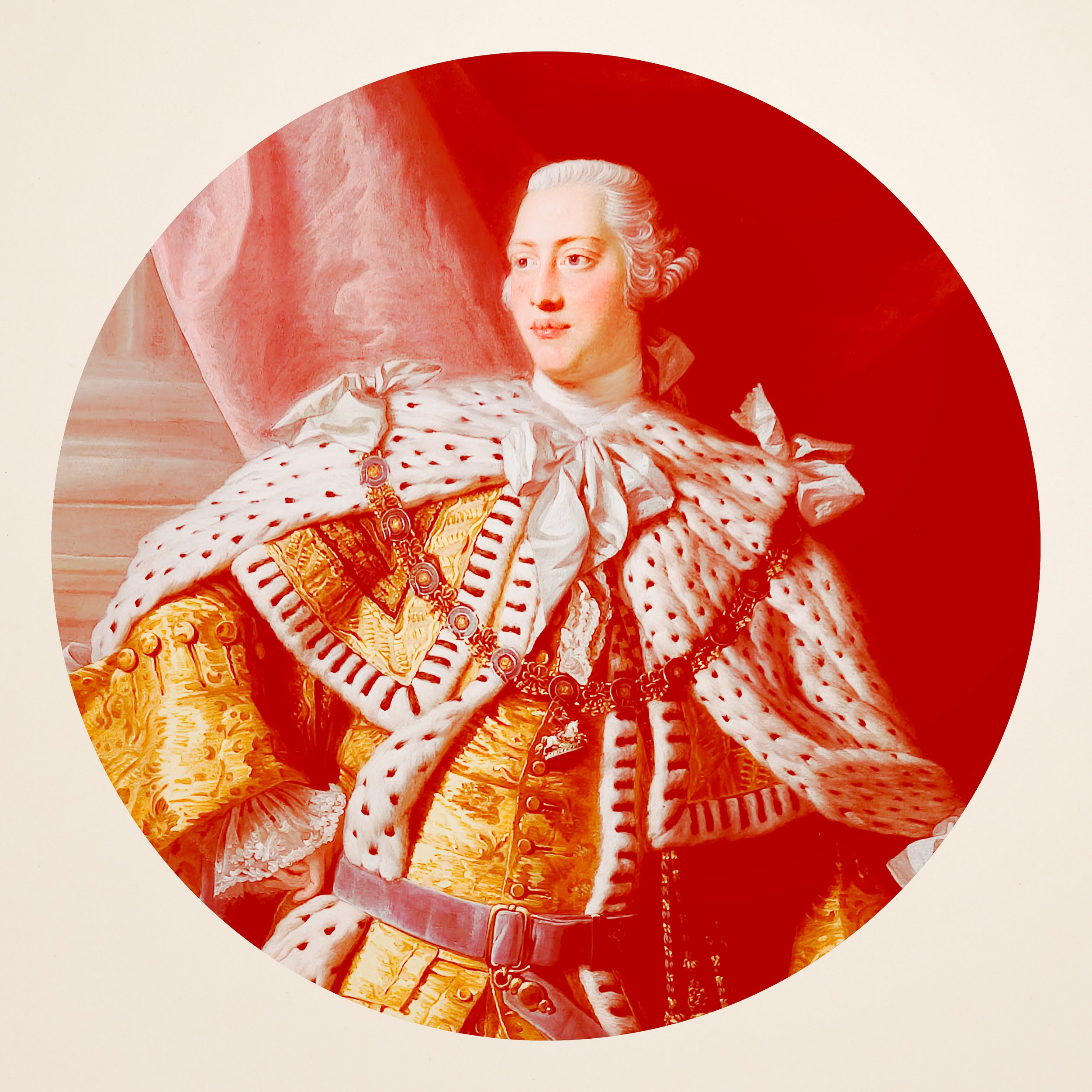
Dr. Lindsay Chervinsky and Clay Jenkinson discuss King George III and his effect on the American Revolution. According to the British historian George Otto Trevelyan, the King was determined to "keep the rebels harassed, anxious, and poor, until the day when, by a natural and inevitable process, discontent and disappointment were converted into penitence and remorse."
Prompted by a listener question, this week's show is a re-broadcast of a classic show from 2008 when President Jefferson was asked whom he would invite to a dinner party if he was unrestricted by location or time. Listen to find out which friends or historical figures he would like to share an evening with.
Last night two ants walked across my kitchen table while I was reading. I've heard about the January thaw all of my life, but this is ridiculous. The record temperatures seem to have thrown off the internal clocks of the ants and propelled them out along my kitchen floor in search of crumbs. I didn't have the heart to crush the life out of the two advance men, the Lewis and Clark of the kitchen recon. They will die of natural causes soon enough, I think.
I was in Medora over the weekend for an educational retreat, and each afternoon walked west on the asphalt trail that parallels old highway 10 and the railroad out to where the Marquis de Mores' goons shot Riley Luffsey in cold blood on June 26, 1883. On the first day the wind was blowing like a son of a gun, as we Dakotans say, so although the temperature was 38 or so, the wind chill felt like ten below. On the second day, I walked with my jacket unbuttoned, no mittens, no hat, and only twice in two hours did I think it might be smart to button up the jacket. On the third day, shirtsleeves were entirely adequate.
Before I left for Medora, I would have shoveled my sidewalks and driveway if there had been time, because they were covered with a fair amount of crusted snow where the winds have packed it up in the past few weeks. There just wasn't time to shovel. When I returned three days later every square inch of my corner sidewalk and big driveway was bone dry. The garden had emerged in the back yard from under the snowpack.
It's the mildest January I can ever remember. I know some severe weather is still to come, and winter is at least ten weeks from being over. This is not a state to get complacent in. I love North Dakota in all of its moods and seasons. In fact, I love a brutal winter. There is nothing like that early morning encounter with what Jack London calls "The North" when you step out of doors at 43 below, that somewhat anxious realization that we are living high up near the edge of the last latitudes of human habitation. On mornings like that you involuntarily scan the horizon.
I love not knowing for sure that the car will start. I love the dull sound of my boots on the 30-below snow. I love the camaraderie of the grocery store and the coffee shop when people stomp in and clap each other on the shoulders and do the standard North Dakota riff raff chorus. I love that moment in a calm night when the wind whips up suddenly into a frenzy and you can hear the grit grinding the surface of the siding on the northwest side of the house.
I can remember from my childhood on grimly cold mornings turning on KDIX on our battery powered portable radio to hear the litany of event cancellations. Mother would perch the radio on the bathroom sink or the kitchen table and tell us to "get dressed just in case." And then Stan Deck's KDIX baritone: "The Busy Bunnies 4-H banquet is canceled tonight at the Eagles Club and will be rescheduled at a later time." "The Knights of Columbus style show has been indefinitely postponed." "And now here's a little tune from the Monkeys to cheer you up." Once we learned—to our deep chagrin—that school had not in fact been canceled, though it might be let out early, we switched back to the Ole Reb on KFYR, where we belonged. School was hardly ever canceled in those days, but during my high school years the rural buses didn't always come in when it was blizzardy.
There is a paradox of inverse proportions in our time. Back in the 60s and 70s the cars didn't start very well when it got brutally cold. Parkas, hoods, gloves, and boots were much less sophisticated. But we all soldiered on through the bitterest weeks of winter with a kind of resigned stoic calm. I remember walking to and from high school, well more than a mile each way, on the worst days of the year and not thinking anything was amiss. Today we have infinitely better gear. Fuel injection means that most cars start every time. The doors and seals on vehicles are much tighter now than they were in my youth. I have three or four pair of winter boots, one of which is guaranteed to keep your feet warm to 100 below. The mittens and gloves are outstanding, if you spend enough, and for the wimps of the world there are chemical hand and foot warmers. The winter undergarments now wick the sweat away from the body almost instantly. And yet now our institutions seem to have a hair-trigger for cancellation. Sometimes it feels as if we North Dakotans have become pathetically squeamish—every superintendent now seems to fear "an incident on my watch" more than lost education.
Through the first half of my life they never really closed the Interstates, no matter what. No travel was advised, sometimes sternly, but if you were dumb enough to venture out, you could usually piece your way through to the other end of the state. Such lurching, low or no visibility, white-knuckle, "oh please, Lord, oh please" road trips are part of the joy of living in North Dakota, at least in retrospect. I remember once when my friend Philip Howard's mother drove to Williston to see her older son play basketball in blizzard conditions that were universally regarded as suicidal. She was driving a low-slung Chevy four-door with rear wheel drive. We reckoned we would never see her again. About midnight she calmly walked back into her house in Dickinson. "Yeah, roads were pretty bad," she said, and brewed a cup of tea. Nothing more. Today the big gates go down on the highways whenever serious storms blow through the state.
If this winter remains mild (unlikely), it will be good news for stockmen, for oil workers, for every town's snow removal budget, for everyone's fuel bills, especially the American Indians who live on extremely tight budgets at out of the way places on the reservations, and for the state's wildlife. We need a few mild winters to rebuild the populations of deer, pronghorn antelope, and other wild creatures. A few mild winters would enable us to measure more precisely how much of the wildlife drawdown has natural causes and how much is the result of the intense industrialization of western North Dakota.
Even if this winter takes a harsh turn, we have broken the back of it already, and we'll will march forward with joy rather than grim determination. The light is returning. We are already 42 days past the longest night of the year. Already we get at least 9 hours, 27 minutes of light every day, up from 8 hours, 32 minutes on December 21. "Official" calendar Spring is now only 47 days away, and "Actual North Dakota Spring" is now no more than three months away. In other words, we're home free.
I'm starting to gather up my garden seeds. I'm going to walk five miles on the bare trails during the Super Bowl halftime, and see if I cannot stir up my own costume malfunction.
This week, President Thomas Jefferson discusses and explains his complex view and vision of an agrarian America. While in Paris in 1785, Jefferson wrote, "Cultivators of the earth are the most valuable citizens. They are the most vigorous, the most independent, the most virtuous, and they are tied to their country and wedded to it's liberty and interests by the most lasting bands."

Road-tripping in France circa 1787: Roads and Canals
In his circumnavigation of France, Thomas Jefferson took roads, floated canals, sailed seas, rode mules, and rode horses. But mostly he took roads. The roads of 18th Century France were highly variable – some good, some grand, some execrable (little more than cakes of rubble) – and they were maintained by a system of local slavery called “le cuvée.” The roads of Languedoc were superb. The roads of sandy Brittany deteriorated faster than they could be built, leading to the unusual predicament that the more they were worked on the shorter they became. And the best roads were those constructed 2000 years earlier by the Romans. In this segment we talk about the roads that Jefferson traveled, with brief mention of the marvelous Canal du Midi.
References:
Robb, Graham, Th-1788-1789e Discovery of France: A Historical Geography from the Revolution to the First World War, WW Norton, 2007.
Gabler, James M. Passions: The Wines and Travels of Thomas Jefferson, Bacchus Press, 1995.
Young, Arthur, Travels in France During the Years 1787 – 1788 – 1789, Doubleday Anchor Books, 1969.
Overview of our Jeffersonian tour of France
Eighty-three thousand one-hundred eight days after Thomas Jefferson left Paris in his American-made horse-drawn carriage to circumnavigate France, we departed Paris in our tiny diesel Renault to do the same. Our intention was to follow his footsteps through the vineyards, antiquities, engineering marvels, cities, and pastures that he passed – to recreate to the extent possible his experience 227 years later, to understand what it must have been like to travel the country alone in 1787, to try to channel the people he met along the way.
References:
Peterson, Merrill D. (Ed.) Thomas Jefferson: Writings, Library of America, 1984.
Gabler, James M. Passions: The Wines and Travels of Thomas Jefferson, Bacchus Press, 1995.
Road-tripping in France circa 1787: How Jefferson Traveled
What few travelers there were of 18th Century France spent more time on water than they did on roads, taking advantage of rivers, coastal waters, and an extensive system of canals. Thomas Jefferson spent a good deal more time than other travelers in his private carriage, driving along the Royal Postal Road that had only recently been opened to private traffic. He opted not to ride with others in a “diligence” or stage coach which, in his time, would have been crowded, dirty, smelly, uncomfortable, and so dangerous that a French-German phrase book of the time included such entries as “I believe the wheels are on fire” and “Gently remove the postilion from beneath the horse.” Jefferson chose to travel alone – in cognito – which added a dimension of dangerous novelty to his adventure that may seem inconsequential in our time but was extraordinary in his.
References:
Robb, Graham, The Discovery of France: A Historical Geography from the Revolution to the First World War, WW Norton, 2007.
Bruce Pitts grew up in Rhode Island, attended Yale and then attended medical school at the University of Pennsylvania and completed his residency in internal medicine at Temple University. In 1982, he joined the Fargo Clinic where he has practiced for the past 30 years. He is married and has two children.
His lifelong interest in American history comes from two sources: growing up near Plymouth Colony and the seven years he spent in where he became fascinated by American revolutionary history and the found of the nation.
Read Bruce Pitts' blog, Pitts in Paris.
"It's such a gift. Every day."
— Pat Brodowski
We speak with two of our favorite Jefferson Hour correspondents: Pat Brodowski, the head gardener at Monticello, and Beau Wright, a frequent contributor to the show and a city council member of Lynchburg, VA.
"I saw the future of the American experiment in the West."
— Thomas Jefferson, as portrayed by Clay S. Jenkinson
Catherine Jenkinson returns to host a conversation with President Jefferson about his travels in France, Europe and the United States.
This week, Thomas Jefferson Hour creator Clay S. Jenkinson returns to the "Jefferson 101" biographical series with the final of three shows devoted to Jefferson's time in Paris from 1784 to 1789.
This week, Thomas Jefferson Hour creator Clay S. Jenkinson returns to the "Jefferson 101" biographical series with the second of three shows devoted to Jefferson's time in Paris from 1784 to 1789.
While I was out of the country one of the great writers of the Great Plains died. His name was Kent Haruf, born February 24, 1943, in Pueblo, Colorado, the author of the celebrated novel Plainsong (2004). It won several awards, but not all that it deserved. Haruf died in his home in Salida, Colorado, at the age of 71.
I was in Rome when I heard the news—from a journalist friend in Telluride, Colorado, a woman from the Great Plains now "imprisoned" in the mountains of western Colorado, if anyone who lives in Telluride could ever have cause to complain. Our friendship is based on the Great Plains, and we discovered right away that we both love Haruf's work. We had actually been making tentative plans to visit him together, to interview him, converging on Salida from Dakota and from Pueblo, Colorado, her true home. I felt helpless to learn of his death in Rome, a place so profoundly opposite to his fictional plains town Holt, Colorado, that they really don't belong in the same sentence. Holt is all dust and Dairy King, a declining backwater where high school sports are the principal town passion, aside from drinking, adultery, and prunish church ladies.
If I had been in North Dakota when I heard the news, I would have thrown a few things in my car and driven in no hurry the back roads to Belle Fourche or Broadus or Lusk, with his books in the back seat, and I would have checked into a shag carpet motel where they still issue you a diamond-shaped green key with your room number on it. I would have ordered a chicken basket at the drive in (oops, "See U in the Sumr") and had a shot in the "Rustler's Bar." That's how Haruf would have wanted to be honored, by a loopy auto pilgrimage through the empty quarter where his characters struggled to pay their bills, pull calves, find mates, make peace with small town bigotries, and wrestle with a God who dwelt partly out of the Old Testament and partly out among the bluffs and coulees and lone cottonwood trees. I'm still going to do this before we settle into spring.
The plot of Plainsong is less interesting than the feel of its portrait of Great Plains life in those towns that continue to exist now only because they once did, towns that somehow hang on beyond the laws of probability even though the quality of life has long since been dimmed and the mating pool is no bigger than a large punchbowl. Plainsong is about a young woman (a girl) named Victoria, whose single mother throws her out when she gets pregnant. Victoria winds up living with two old bachelor farmers, so unbearably single and set in their basic rhythms that they regard Victoria like a fawn they have rescued from the hay rake or a porcelain doll that might break if you look at it cross-eyed. In the end everyone is damaged precisely as they (and we) knew all along they would be, and life goes on in Holt because it's never going to be otherwise on the high plains "where the rain don't come."
I met Kent Haruf four or five years ago when I was giving a lecture in Salida. There was a reception after my talk, a picnic, and I was being introduced to one eccentric after the next. Then my host, a glorious redhead in a top hat, said, "This is Kent Haruf. He's a writer." When she said Haruf, I nearly sagged to my knees. I had recently read Plainsong and loved it. In fact, when I finally put it down I wondered if it would be possible to locate the author and strike up a correspondence. Haruf's novels are set in a fictional town in eastern Colorado, but they may as well be the actual towns of Limon, La Junta, Trinidad, or Lamar. I lived just on the other side of the Kansas border from all that wild open dry high plains country when I was first married. Haruf absolutely nailed its windswept dilapidation, the sense that every time folks aspire to climb out of the lowest rung of Maslow's hierarchy of human needs, trouble and bleary confusion are sure to follow. Haruf is my kind Great Plains writer. We had an hour of conversation together in Salida, and he offered to read my work and help me in any way he could.
Last June I gave the keynote talk at the annual Willa Cather festival at Red Cloud, Nebraska. Turns out I was a sub. The keynote was supposed to be Kent Haruf, but he was not feeling well enough to make the journey. At the conference I met the photographer Peter Brown, who collaborated with Haruf on a magnificent Great Plains coffee table book called West of Last Chance. It contains some of the best Great Plains photographs I have ever seen. They are not all landscapes and they are not all pretty. Brown has an eye for the townscapes that Haruf writes about—real plains Americans standing in front of barber shops and gas stations, junked vehicles next to deteriorating farm to market asphalt roads, home brew restaurant signs, hail bales painted as the American flag, farmers standing gothically next to grain elevators, a man crouching below a giant mural that imperfectly depicts John Wayne. If you are still looking for a great Christmas book for those who love the Great Plains, you can find discounted copies at Amazon.com. West of Last Chance is the Great Plains not as state tourism divisions like to depict us, but the Great Plains as they actually are.
The photos are superb, but it is Kent Haruf's short prose commentaries that I really prize. Here's a bit of one: "We were in Shattuck's Café middle of the morning… it's one of those places where they bring you biscuits and gravy with every breakfast order unless you tell them you don't want any…. I was paying more attention to what the three men at the next table were saying. They had on orange vests, worked for the highway department … and at one point—I can't recall now what had prompted it—one of them said to the other two: 'We may not be the smartest sons of bitches in the world, but we sure can kill weeds.' And I thought to myself: Bud, say no more."
Haruf's long passage on church suppers is one of the greatest short pieces I have ever read. If you email me I will send it to you. I've read it a dozen times now, always out loud, and I burst into tears at a different place every time. I've been in that church basement in five or six locations on the plains, because they are all the same out there everywhere. "And there were a good many church women in the kitchen getting things ready, making coffee and stirring up pitchers of iced tea, and uncovering dishes that people had brought in, and heating things up, and cooling things down, and sticking in serving spoons, and hustling back and forth carrying loaded dishes and platters out to the serving tables… and don't you know when she made something it always tasted as good as it looked."
Haruf's last book Our Souls at Night will be posthumously published in 2015. Meanwhile, I'm re-reading the five previous novels.
This week, an interview with Clay S. Jenkinson about his new book, The Language of Cottonwoods.
We're joined by Char Miller to discuss a new book, Theodore Roosevelt, Naturalist in the Arena. The book is a collection of noted essays by Roosevelt scholars and was edited by Miller and Clay Jenkinson. Char Miller is W. M. Keck Professor of Environmental Analysis and History at Pomona College.
"Understand him for his flaws as well as for his greatness."
— Joe Ellis
We welcome historian Joseph Ellis to the program this week to talk about his book American Creation. In the book, Ellis notes a series of five contributions the founding fathers made and Clay Jenkinson asks how those contributions are holding up during our time.
Over the past few days I have had the wonderful guilty pleasure of sitting down to read Robinson Crusoe cover to cover. I know I should have been doing other things, some of them pressing, but I just sat there and read this famous and fabulous account of a man who is shipwrecked on a small island off of Venezuela and spends 28 years there, 26 alone with a parrot and some semi-domesticated flocks of goats.
ROME
Week three. This is my seventh or eighth trip to Rome, and my longest. I'm trying to stay one or two steps ahead of the students I am teaching here. They are seasoned cultural travelers by now, and they have learned a tremendous amount. There are days when I'm not sure what I have to teach them. Whenever they are otherwise occupied, I hop the bus (the dreaded 870) into the heart of Rome and wander about with maps, a guidebook, and my notebook and camera.
Tom Schulzetenberg, the U-Mary Rome program director, has mastered the city in his three years here. He's an invaluable guide. He's gone out of his way to make it possible for me to take the students to a number of places that are off the beaten track: the ancient port called Ostia Antica (Rome's Pompeii); the Non-Catholic Cemetery, where the English poets Keats and Shelley are buried; the emperor Hadrian's fabulous villa at Tivoli. Today, at our final lecture, I taught them the meaning of a number of Latin phrases that have made their way into English, including in loco parentis, "in the place of one's parents." Tom and his wife JoAnn have served in that capacity with real grace. As you know, U-Mary makes much of its capacity to create "servant leaders." I find it easier to recognize that quality than to describe it. Tom and JoAnn are the epitome of servant leaders—warm, generous, humble, thoughtful, careful, and firm--and they have sacrificed a great deal to live abroad on behalf of the liberal arts at UMary. If you think living in Rome is easy, just try it.
When I get home I'm going to burn my travel clothes, and rethink many of the rhythms of my life. The cars here are miniscule. If all the Ford F250s of Bismarck alone were loosed in the center of Rome, the traffic jam would paralyze the city for weeks. People here can park a Smart Car in a space we wouldn't attempt with a bicycle. I've walked between six and ten miles a day without even thinking about it, and while I walk the city I keep puzzling over why the Romans are so much fitter, leaner, and healthier than we are. Hmmm.
I wish we lived in a society that chose to send all college students for a semester or a year abroad. Many of the fundamental problems of American life would be solved if we had a universal Fulbright program. Foreign travel to a nation that doesn't speak English is the first important step towards global wisdom. We may be America—always the elephant in the room, and sometimes still the class act—but there are scores of countries that don't live as we do, do things in our way, consume at our Rabalaisian pace and volume, and yet they are perfectly civilized. Many of them, in fact, score higher on the happiness index than we do. To travel abroad is to realize that our way of doing things is not the only way, and not invariably the best way.
When we travel to other countries—as I keep telling my students—we are guests in another culture, and it is important that we pull back a little from our full "display" of our American brand of style, confidence, and expressiveness. We should never for a minute be ashamed of who we are and where we come from, but we should remember, too, that being an American (as opposed, say, to being Canadian or Norwegian) comes with a burden and a special responsibility. We are the richest, most powerful nation on earth (ever!), what Secretary of State Madeleine Albright called "the indispensable country," and that automatically rubs others the wrong way at times.
Whenever I travel abroad, I am ashamed that I am essentially monolingual. Once, long ago, when I was married, my wife and I spent a week with one her college classmates, an extremely talented woman named Silka from Munich in Germany. She spoke four or five languages, including French, Russian, and flawless Oxford English, the Queen's English. Her husband had eight languages. We went out to dinner one night with her brother and sister-in-law. The sister-in-law, some kind of European slacker, spoke only German and English. So the dinner was conducted in English, as a favor to the "Americans." I asked for permission to pay and to settle the bill in my weak German. As I recall, I bungled my few sentences so badly that I wound up in a Turkish prison!
Traveling holds a mirror up to us. We are invited to gaze into that mirror, or at least glance at it when we observe how other humans go about their business, and how they respond to us in their midst. Whenever I travel I make resolutions that make New Year's look like a routine Thursday. Theodore Roosevelt, in addition to being one of the most active men who ever lived, and a career politician, once shocked a White House guest, from Poland, by giving her a sustained analysis of the history of Polish literature. In 1910 he lectured about German literature at German universities—in German. Like Jefferson, he was a true citizen of the world. I had a professor friend at UND who learned Russian merely for the pleasure of reading Tolstoy in the original. At this point in my life, I would settle for reading French, Swedish, German, Russian, and Italian literature in translation, but where's the discipline going to come from, and who will grant me the 27-hour day?
A few days ago we went to St. Peter's Square to hear Pope Francis deliver a homily to celebrate the Feast of the Immaculate Conception. Right on time, he appeared at the appointed window. I watched him deliver his remarks through my binoculars, while the mass of people watched him on the Papal Jumbotron. He seemed joyful and genial and completely unself-important as he delivered his remarks and waved to the assembled multitude.
After Pope Francis had withdrawn and the crowd began to disperse, one of the students walked with me to the city center. Along the way, he suggested that we duck into one of the scores of nearly identical looking Baroque churches in Rome, the kind you might well just pass by on your way to lunch. He explained to me that this was the Church of the Gesu, the first Jesuit church to be built in Rome, dedicated in 1584. Inside he gave me a brief but really impressive commentary on the various features of the church, and the ways in which it epitomized the Counter-Reformation. Here was my student, a young citizen of the world (since September!) teaching his professor in a graceful and helpful way. A few days earlier, a new young friend, the son of one of my closest friends back home, told me that during Lent he and his fellow seminarians walk to a different church every day for 40 days for early morning Mass. I'd give anything to join those pilgrims.
Rome is truly inexhaustible; me, not so much. I'm now eager to get home, to sit with my mother in her spare Congregational church in Dickinson, to decorate a genuine Christmas tree, and to set up my new heroic spring reading schedule. This has been a bellissimo viaggio, which, so far, is the sum total of my Italian.
This week, we welcome back Catherine Jenkinson as guest host. She and Clay Jenkinson discuss the celebrations of the new year and how the calendar has changed over the course of several millennia. They also discuss new year's resolutions, and the ways celebrations have changed since Jefferson’s time.
"Our society should be a way of encouraging human possibility and human community."
— Clay S. Jenkinson portraying Thomas Jefferson
Prompted by a letter from a listener, President Thomas Jefferson shares his views on American exceptionalism and his hope that America will stand as a strong and good example for the rest of the world to follow.
"This book reveals [Washington] as a man of emotion, raw emotion."
— Clay S. Jenkinson
In anticipation of our conversation next week with Peter Stark, the author of Young Washington, we speak with Jefferson about our first president. Jefferson also comments on the time change, and the importance of using available daylight.
We answer listener questions this week, and the most mail we received was about Robert Kagan's new book, The Jungle Grows Back, which Tom Friedman of The New York Times called "An incisive, elegantly written, new book about America’s unique role in the world."
Veduta interna della Basilica di S. Pietro in Vaticano. 1748. Giovanni Battista Piranesi. From the New York Public Library Digital Collections.
ROME
Week two. Recently I took the University of Mary students to the top of St. Peter's to the cupola. It was a day of rain in Rome, so the view from the top of the dome was not optimal, but we were, for goodness sake, standing at the apex of St. Peter's Basilica and looking out on one of the greatest cities of the world. Even through the drizzle we could see the Colosseum (80 AD) off in the distance, the Pantheon (126 AD), the Roman Forum (no date can mark all that it contains), and approximately a gazillion churches and basilicas, if I may use a technical term. It's overwhelming. I took scores of photos. Now they all look, as I surf back through them, like drizzly grayed-out photos taken from St. Peter's on a rainy day. With almost everything in life, you have to be there to experience its fullness.
All hail Monsignor James Shea, the president of the University of Mary, for establishing a Rome campus. I've had the opportunity to observe the 24 students who have spent this semester in Rome. About three-fifths of them are North Dakotans, the others mostly from Minnesota and South Dakota. One or two of them flew on an airplane for the first time to come to Rome.
One young woman had been working her family's grain harvest in northern Minnesota for 18 straight days before she flew. Her mother packed while she drove grain truck. Then, suddenly, they were here, halfway around the world, many of them getting their passports stamped for the first time, in a place where not very many of the local folks speak English, and where most of the assumptions and rhythms of daily life in the American Midwest break down fast.
Nor, when they arrived after 15 hard hours of travel, a day later than they set out, were they allowed to rest and unpack and regroup. No, they were taken immediately on a long day of jet-lagged touring around Rome to get some sense of the immensity of the adventure they have undertaken. If a liberal education is designed to take us out of our comfort zone without disabling us from preserving our core value system, Monsignor Shea's Rome campus is one of the supreme educational opportunities that begin in the faraway state of North Dakota.
It is said that on a very hot summer day in Iowa you can actually see the corn grow. Since Labor Day these students — the raw seed stock of North Dakota and Midwestern life — have grown in ways that will take your breath away. They are still kids, of course, college students, children of the heartland, full of laughter and the somewhat alarming exuberance of late adolescence. But they have undergone a cultural metamorphosis here that will mark them for life.
Some of them are nursing majors, or engineers, or business majors, but here in Rome they are all being baptized together in vast ocean of high culture. Rome is a humanities course on steroids: painting, sculpture, mosaic, architecture, music, history, literature, engineering, urban landscapes, sometimes all within the walls of a single structure.
Thanks to their experience here, they now know the difference between Renaissance and Baroque. They know why, when, and how Michelangelo was prevailed upon to paint the ceiling of the Sistine Chapel (1508-12). He did not think of himself as a painter, and then he painted a whole ceiling of stunning masterpieces.
They know why, and under what historical circumstances, he was brought back decades later (1536-41) to paint the Last Judgment on the wall above the altar in that chapel. They know how to talk about the Reformation and the Counter-Reformation. They can discuss Gian Lorenzo Bernini's magnificent, uncanny, astounding "Ecstasy of Saint Theresa"without smirking.
They know now how to change buses, on the (to put it kindly) erratic Rome transit system, and wind up where they wish to be. They can order food without pointing at the menu. They attend Mass in Latin, Italian and English. They have tried food they would reject outright in Bowman, Bowbells, or even Bozeman, Mont.
They have broken their connection — for some an addiction — to television, for there is none at the U-Mary Rome campus, and the Internet is sufficiently dicey here to discourage incessant recourse to Facebook or email. And, perhaps most astonishing of all, they cannot use cell texts as their primary way of dealing with the rest of humanity.
Some of what they have learned, some of what they have become, will be hard to communicate back home. I have throughout my whole life found that transaction — trying to explain to others, even my closest friends and kin, why something was so meaningful, so important, so tender, so mysterious, so compelling, so destabilizing — a challenge, usually a matter of frustration.
So in the end the stories we tell repeatedly usually slip to that which is universally translatable: the time you ordered what you thought was X, and it turned out to be something that should never ever have found its way to a plate; the day you tried to find an angel food cake mix or sweet potatoes in a Roman grocery store; the day you left your wallet on the tram. These are important stories, the stuff of all travelers, delightful to tell, entertaining to hear.
But there will be other stories, too, harder to find words to express, and they are equally or more important. The young man from Wishek, a football player and business major, who stood in front of Michelangelo's David (Florence) and cried for the first time at the unbelievable beauty of what the human spirit can create at its best.
The young woman from Harvey who really understood for the first time the sacrifice of the cross when she saw an old Italian woman struggle to kneel on rheumatic knees at a Mass at St. John Lateran. The sense of helplessness one feels in the face of Raphael's staggering talent, or the feeling of shared humanism (confidence in the human project, kinship with a people who lived thousands of years ago) one feels for the Romans of Hadrian's time while craning one's neck towards the oculus of the Pantheon. Or the sadness of trying to gaze at Michelangelo's Pieta long enough until you have drunk it in completely, realizing that you can never bring enough to it to give it the loving attention that a piece of art that perfect deserves.
For the moment I want to concentrate on the students who are North Dakotans. I can see from watching them day after day, in study, in community, in laughter, and in recreation, that their lives in some important way will never be the same. They will return to the Great Plains deeper, fuller, a little more complicated, perhaps a little more restless than they were when they boarded that plane months ago.
As a mere Congregationalist, I cannot say for sure, but I think they will be better Catholic Christians for this experience. I think they will almost automatically become leaders at the University of Mary, in Bismarck, in North Dakota, and in America, thanks to this profound adventure. What a gift U-Mary has given them, and what a gift they are going to give back to the social fabric of North Dakota. Not one of them is cocky. Not one of them is, "Yeah, I can't wait to eat a real pizza!"
(Which, if you think about it…)
This week, we welcome back Catherine Jenkinson as guest host. She and Clay Jenkinson discuss the celebrations of the new year and how the calendar has changed over the course of several millennia. They also discuss new year's resolutions, and the ways celebrations have changed since Jefferson’s time.
"Our society should be a way of encouraging human possibility and human community."
— Clay S. Jenkinson portraying Thomas Jefferson
Prompted by a letter from a listener, President Thomas Jefferson shares his views on American exceptionalism and his hope that America will stand as a strong and good example for the rest of the world to follow.
"This book reveals [Washington] as a man of emotion, raw emotion."
— Clay S. Jenkinson
In anticipation of our conversation next week with Peter Stark, the author of Young Washington, we speak with Jefferson about our first president. Jefferson also comments on the time change, and the importance of using available daylight.
We answer listener questions this week, and the most mail we received was about Robert Kagan's new book, The Jungle Grows Back, which Tom Friedman of The New York Times called "An incisive, elegantly written, new book about America’s unique role in the world."
"Spaccato interno della Basilica di S. Paolo fuori delle Mura." Giovanni Battista Piranesi. c. 1751. From the New York Public Library Digital Collections.
ROME
I am spending Thanksgiving in Rome. I give thanks to the global internet for making it possible to write these words 5,185 miles away from the turkey my mother and daughter are cooking in Dickinson. The students I am teaching for the University of Mary are down the hall Skyping their families back home. We live in an age of technological miracles. How is it that humans can zip around the planet this way and communicate more or less effortlessly over vast distances? If our civility and peacefulness and generosity of spirit were equal to our technological wizardry, the world would now be approaching utopia. But while we give thanks for the abundance of our lives, radical Islamists are cutting the heads off people including American journalists, they regard as infidels. And we, admittedly, are killing Islamists we regard as evil doers with drone strikes and cruise missiles. As humans overcome space, the paradoxes of human nature become more biting. We can send video of stupid pet tricks to the far corners of the planet effortlessly, and free, but we cannot get water to dying people in sub-Saharan Africa.
Just as I wrote that last sentence, my computer "rang," and Skype announced that my daughter was video calling. And suddenly there she was, sitting at the kitchen table of the house I grew up in in Dickinson, not quite clear as a bell, but a hundred times more clear than when Neil Armstrong bounced down onto the surface of the moon. I could see her expressions as if I were sitting across that table from her. I could see, for example, that she got a good night of sleep in her first night in North Dakota. Good news for a busy college student at the end of a hard semester, and for her doting father who worries that she studies too hard.
We talked for 45 minutes, for free. For free! How is this even possible? If you had said to me when I was a junior in college (1975) that the day would come when you could talk free for most of an hour between Rome and North Dakota, I would have said, "Never gonna happen." If you had said that there would be video, too, free, I would have said, "You've been reading too much science fiction." But there she was, laughing, telling stories, talking about the chaos in Ferguson, Missouri, asking me about my flight to Rome, etc. Behind her I could see my mother bustling about the kitchen making her famous pumpkin chiffon pie for tomorrow (I wrote this on Thanksgiving eve). Mother is the epitome of domestic efficiency, and—if the truth be told—she is a kind of kitchen Nazi who does not welcome help when she is hard at cooking, baking, or clearing up. She was cracking eggs while my daughter was cracking jokes, and from time to time Mother would chime in from four or ten feet away with a wise crack of her own, or "refute" something my daughter was saying. They have the most amazing love for each other that I have ever seen between grandmother and granddaughter, but they are neither of them very sentimental in that love. They tease and jostle each other in a kind of running dialogue. When Mother said something particularly opinionated, I could actually see my daughter raise her eyebrows for her father's benefit. Fortunately, there is no recording of the video conference.
I was telling my daughter about a field trip I have planned for my students on Monday—to Ostia Antica, the ancient port of Rome where the River Tiber meets the Mediterranean. I told her one of the things I want these students to see is the place where St. Augustine's beloved mother Monica died. There is a famous passage about it in Augustine's Confessions. My daughter is a classics major—Latin and Greek—and so before I had really begun my description she was telling me where Monica was finally buried in Rome, and that in that church we could also find a painting by Caravaggio. So my 20-year-old daughter in the middle of the plains of western North Dakota was teaching her father, the teacher, half way around the world.
So now as I write these words in the aftermath of that sweet conversation I feel bittersweet. On the one hand, I am so thankful that I was able to connect tonight (their today) with the two women who mean most to me. To see my mother separating egg yolks from egg whites, and waving her wooden spoon mock-menacingly at my daughter when she disputed some anecdote, while my child rolled her eyes and laughed with pure joy, was a great delight and comfort. It was almost as if I were in that kitchen. I could see the stairs up to the second floor. I could see the big kitchen window and the snow-strewn yard beyond, and that wonderful glaring white light of North Dakota on a cold crisp November day. I was with them in some genuine way, and it was infinitely more familiar and intimate than a long distance telephone call. And yet…
As I write the last of these words, I am overcome with sadness. Being away from them during my favorite holiday of the year (theirs too) was going to be hard, and I had worked up some pretty strong stoicism to get through this. In some sense it would have been easier to remain resolutely in this zip code than to peer in virtually on theirs. I wanted to hug my child. You know that hug that redeems everything in life. Even a four second hug can serve as a full top-off on love. There she was, tantalizingly close, full of youth and life and joy and love, eating the occasional barbecue potato chip, as if we were not engaged in spectacular form of techo-badminton. But she was also untouchable. It felt like one of those ghost stories in which something or someone is completely "real" until you reach out to hold them, but then your hand goes right on through the illusion. There is a story in Virgil's Latin epic the Aeneid (Book Two, I think) that works like this. If we were still Skyping, my daughter would now inform IM me the passage, with a slightly (and carefully) raised eyebrow that her father could have forgotten precisely where to locate the passage. So now I have decided to have my U Mary students read one of the twelve books of the Aeneid next week.
So here I am, sitting in an office on the Rome campus of the University of Mary. One by one the students have shuffled off to bed. The campus is quiet (it is only quiet when they sleep!). It is now technically Thanksgiving here in Italy, where Thanksgiving is not celebrated. But I'm not really here now, though the fingers that type these words are tired. I am across the world at that kitchen table in Dickinson, listening to the love contest between the two women who flank my heart, and contributing the occasional sentence. I can smell that pie.
And I am immensely thankful, in a way that I would not be if I were there, but with a wash of sadness like the vanilla mother is swirling through those beaten eggs.
This week, we welcome back Catherine Jenkinson as guest host. She and Clay Jenkinson discuss the celebrations of the new year and how the calendar has changed over the course of several millennia. They also discuss new year's resolutions, and the ways celebrations have changed since Jefferson’s time.
"Our society should be a way of encouraging human possibility and human community."
— Clay S. Jenkinson portraying Thomas Jefferson
Prompted by a letter from a listener, President Thomas Jefferson shares his views on American exceptionalism and his hope that America will stand as a strong and good example for the rest of the world to follow.
"This book reveals [Washington] as a man of emotion, raw emotion."
— Clay S. Jenkinson
In anticipation of our conversation next week with Peter Stark, the author of Young Washington, we speak with Jefferson about our first president. Jefferson also comments on the time change, and the importance of using available daylight.
We answer listener questions this week, and the most mail we received was about Robert Kagan's new book, The Jungle Grows Back, which Tom Friedman of The New York Times called "An incisive, elegantly written, new book about America’s unique role in the world."


Clay Jenkinson welcomes back David Nicandri for a discussion about Sir Ernest Henry Shackleton, the explorer who led three British expeditions to the Antarctic. They also talk about Thomas Jefferson's influence on exploration. Nicandri is the author of River of Promise: Lewis and Clark on the Columbia and Captain Cook Rediscovered: Voyaging to the Icy Latitudes.
Clay Jenkinson recently lead a conference for the Smithsonian that introduced attendees to the Lewis and Clark expedition. The lecture was brimming with questions, so many that there was not enough time to answer all of them. This week, we try to finish that task and answer those extra questions about Lewis and Clark.
We present a fascinating conversation with HannaLore Hein, who in 2019 became Idaho’s first woman state historian. Clay Jenkinson and Hein discuss her duties as a state historian and talk about an author from Idaho, Vardis Fisher. His first novel, Mountain Men, was used as the basis for the 1972 film Jeremiah Johnson. His book, Suicide or Murder: The Strange Death of Meriwether Lewis, published in 1962, is regarded as starting the longstanding controversy over the death of Meriwether Lewis.
This week on the Jefferson hour, a conversation with David Nicandri about his new book “Lewis and Clark Reframed: Examining Ties to Cook, Vancouver and McKenzie”, and the importance of reading not only the journals left, but also their “day books”. In writing the book, Nicandri speaks about his goal to not just get get into explorers shoes, but to get “into their heads’.